


Brolamen Whitening Isolation Sun Protection 3-in-1 Sunscreen Cream
$39.99 USD20% off
Product: 1 Box
PRODUCT INFORMATION
Brand:Brolamen
Specification: 50g bottle
Main Ingredients
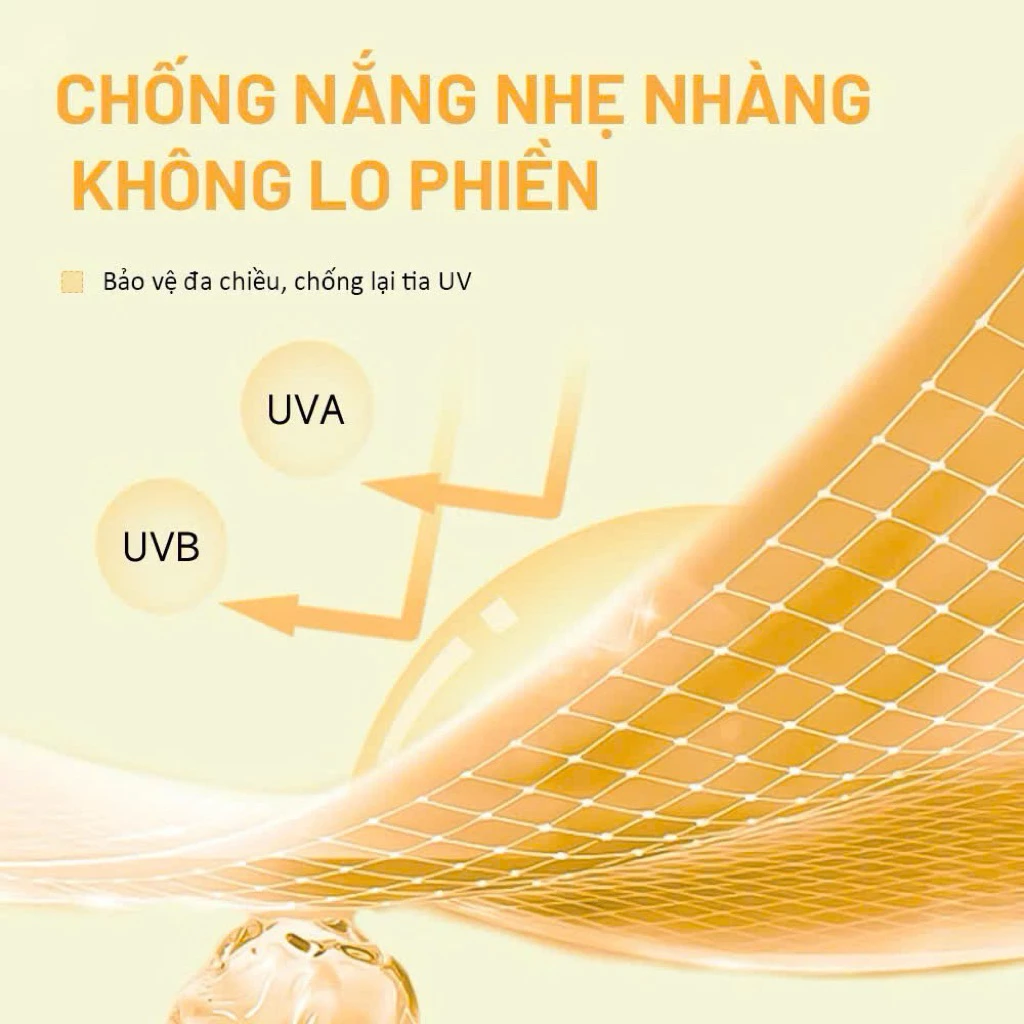
A sunscreen formula typically consists of three main ingredient groups: UV filters (chemical or physical filters), skin-nourishing ingredients, and stabilizers. Brolamen Whitening Isolation SPF50+++ combines some chemical filters with skin-brightening agents and quick-drying, non-greasy feel enhancers. Below are the ingredients commonly listed in the product's ingredient list.
1. Octocrylene
Octocrylene is one of the most common chemical filters, capable of absorbing UVA and UVB rays in the range of 280-360 nm. Due to its stable structure, octocrylene is often used to enhance the protection level of other filters and help sunscreen formulas from degrading quickly under light exposure.
In the context of Brolamen Whitening Isolation SPF50+++, octocrylene plays an important role as a "key component," helping to maintain SPF 50+ evenly across the skin when applied. Additionally, the non-greasy nature of octocrylene also supports the "quick-drying" sensation that users often appreciate.
2. Ethylhexyl Methoxycinnamate (Octinoxate)
Octinoxate is a strong UVB filter, mainly absorbing UVB rays (280–320 nm). It is one of the widely used filters in affordable sunscreens due to its effective protection and low production cost.
With Brolamen's formula, octinoxate helps enhance the SPF index, while interacting with other filters to create a broad-spectrum protection layer, minimizing the ability of UVB rays to penetrate the skin, which can cause mild inflammation reactions or increase skin sensitivity.
3. Titanium Dioxide (TiO₂)
Titanium Dioxide is a physical sunscreen that reflects and scatters both UVA and UVB rays. When coated with a nano layer, TiO₂ still maintains its protective abilities without leaving a white cast on the skin - an important advantage for users with darker skin tones.
In Brolamen's formula, TiO₂ not only provides a physical protective layer but also helps stabilize chemical filters, minimizing degradation from light. This explains why the product can maintain "SPF 50+++" even after continuous use.
4. Niacinamide (Vitamin B3)
Niacinamide is a derivative of vitamin B3, known for its ability to improve skin barrier function and support skin regeneration. Although not a UV filter, niacinamide is often included in sunscreen formulas to minimize potential irritation that may occur when the skin is exposed to prolonged sunlight.
With "Whitening Isolation" in the product name, niacinamide is one of the ingredients contributing to the brightening effect on the skin. By supporting the melanin conversion process, niacinamide can help maintain an even skin tone, reducing the appearance of dark spots after sun exposure.
5. Vitamin C (Ascorbic Acid) and Vitamin E (Tocopherol)
These two antioxidant vitamins are commonly found in modern sunscreen formulas. Vitamin C and Vitamin E can neutralize free radicals produced when the skin is exposed to UV rays, thereby minimizing negative effects on the skin's protein and lipid structures.
In Brolamen Whitening Isolation, the combination of Vitamin C and Vitamin E not only helps to "protect" but also supports "improving" skin appearance, reducing the likelihood of uneven brown spots and enhancing the feeling of soft skin.
6. Glycerin
Glycerin is a natural moisturizing agent that has the ability to attract water from the environment into the skin's outer layer, maintaining the necessary moisture. When combined with UV filters, glycerin helps prevent skin dryness caused by sunlight and reduces the feeling of "stickiness" on the skin.
In the context of "non-greasy quick-drying" advertised, glycerin plays an important role in balancing moisture, creating a gentle feeling when applied, and quickly absorbing into the skin.
USES AND HIGHLIGHTED FEATURES
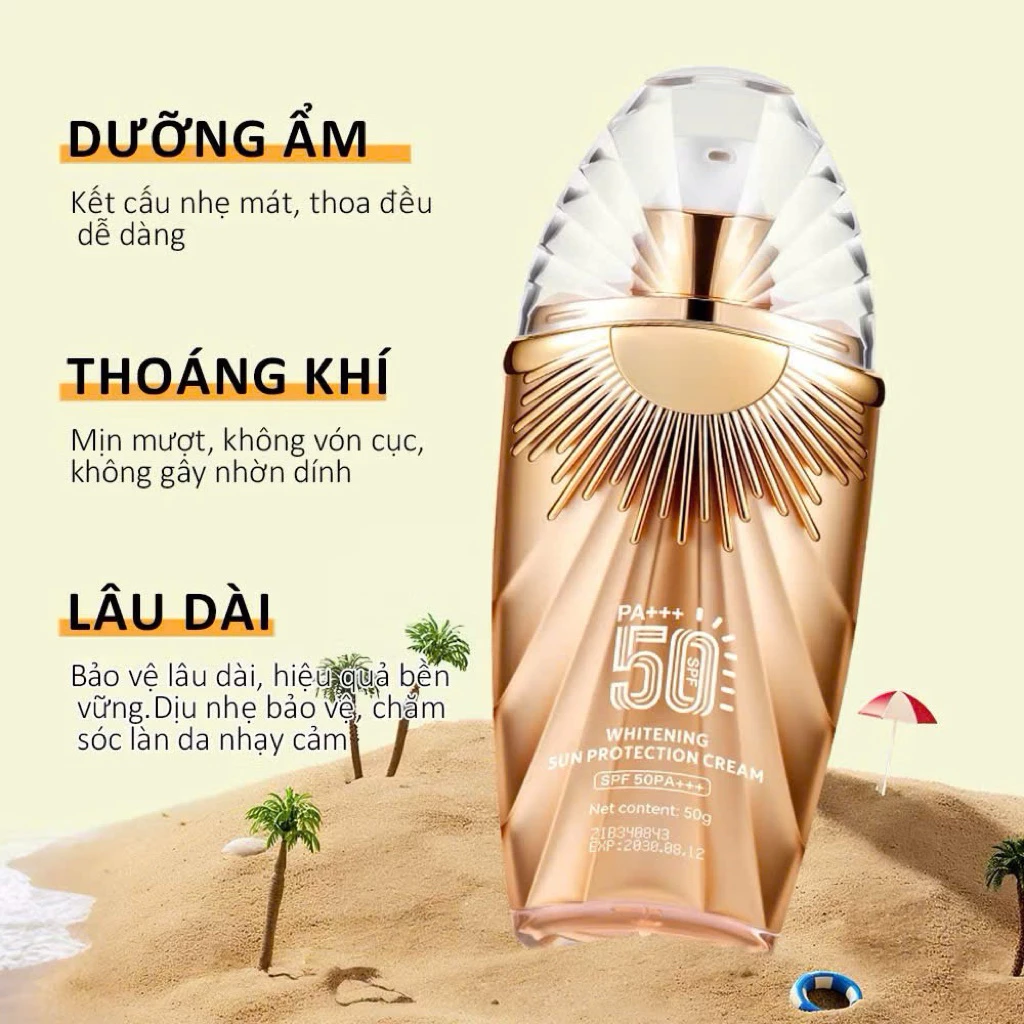
To understand why a product achieves a high SPF rating while maintaining a non-greasy feel, we need to consider how the ingredients interact with each other and with the skin. The protective mechanism relies not only on the ability to block UV rays but also includes factors that support the skin in sunlight exposure.
Multi-band UV ray filtration technology
As mentioned, Brolamen's formula combines both chemical filters (Octocrylene, Octinoxate) and physical filters (Titanium Dioxide). This combination creates a broad-spectrum "shield" capable of blocking both UVA (wavelengths of 320–400 nm) and UVB (280–320 nm). When chemical filters absorb UV energy, they convert this energy into light heat, while TiO₂ reflects and scatters the remaining UV rays.
This helps minimize the "penetration" of UV rays, an important factor in maintaining stable protection throughout use. Filters are designed not to irritate the skin, suitable for sensitive skin.
Antioxidant effect
Vitamin C and Vitamin E in the formula act as "free radical scavengers." When UV rays trigger the oxidation process on the skin, free radicals can break down lipid, protein, and DNA molecules. By their ability to "neutralize" free radicals, these vitamins help maintain the skin cell structure, minimizing early signs of aging.
Niacinamide, while not a strong antioxidant, supports skin repair by boosting ceramide production, improving the skin barrier, and reducing water loss. When the skin is better protected, its ability to withstand sunlight increases, minimizing dryness or irritation.
Quick-drying and non-greasy effect
The "quick-dry" factor is often a concern for users as it affects comfort during outdoor activities. In Brolamen, the combination of Octocrylene (non-sticky) and glycerin (moisturizing without leaving a sticky feeling) creates a thin layer that quickly absorbs into the skin.
In addition, using a "gel-cream" or "light lotion" helps reduce the viscosity of the formula, allowing the skin to "breathe" while still being protected. Light thinning agents (such as dimethicone) are often used to create a "silky" feel on the skin, while also preventing the occurrence of "stickiness" when the skin comes into contact with sweat or water.
Permeation process and maintenance of protection level
After application, the chemical filters start absorbing UV rays directly on the skin surface, while TiO₂ creates a protective reflective layer. Glycerin and other moisturizing agents help maintain moisture, preventing the protective layer from becoming "cracked." When the skin is adequately moisturized, the sunscreen layer does not degrade quickly, helping to maintain a stable SPF level for the first 2 hours - the recommended time for reapplication.
INSTRUCTIONS

Although Brolamen Whitening Isolation SPF50+++ is designed to suit various skin types, using it correctly is still a determining factor in actual protection level. Here are some notes based on general principles for applying sunscreen.
- Apply the appropriate dosage:For the face, an amount of about 2 mg/cm² (equivalent to a fingertip) is recommended. Applying too little can reduce the actual SPF, while applying too much can feel thick.
- Apply sunscreen before going outside:To ensure the UV filters have stable time on the skin, users should apply the cream about 15-20 minutes before direct exposure to sunlight.
- Reapply periodically:When in contact with water, sweat, or after about 2 hours, reapplication is necessary to maintain protection. This applies to all types of sunscreen, regardless of SPF.
- Skin reaction test:Although the formula is designed to minimize irritation, users with sensitive skin should perform a patch test on a small area before applying it to the entire face.
- Combined with other protective measures:Wide-brimmed hats, sunglasses, and sun-protective clothing are still important supportive measures, especially when spending extended periods outdoors.
TIPS FOR CHOOSING AND USING SUNSCREEN FOR OILY SKIN
Check sensitivity to ingredients
Although the product is designed to minimize irritation, everyone's skin sensitivity is different. Users should test on a small area of skin (e.g. behind the ear) for 24-48 hours before applying to the entire face.
Avoid excessive use
Applying too much cream can cause a sticky feeling, even clogging the pores. Conversely, using too little will reduce SPF protection, making the skin more susceptible to UV damage.
Product preservation
To maintain effectiveness, sunscreen should be stored in a dry place, away from direct sunlight and high temperatures. Close the lid tightly after use to prevent air and light from compromising the stability of the UV filters.
Review the feeling after use
People with oily skin often pay attention to the feeling of "dryness" or "greasiness". If the skin still feels oily after applying, you can increase the amount of silica or choose to apply more lightly. On the other hand, if the skin feels too dry, you may consider combining it with a light moisturizing serum.